Access control - who, where and when
From an electronic lock on a single door to full-height turnstiles at a factory gate. Restrict access by space and time - no keys, no guard at every door.
Levels of protection
Six levels, from the simplest to the strictest. Open a level to see exactly what it solves, where it is used and where its limit is - because a more expensive level is not always the right one.
1Electronic locksThe lowest level - a door stays a door
An electronic lock and reader go onto existing doors. A card replaces the key: revoking rights is a matter of a single click, not changing the cylinder and handing out new keys. Every entry is logged - who, which door, when.
Where: Offices, laboratories, warehouses, residential buildings.
Limit: the lock controls the door, not the number of people. If one person unlocks and three walk in, the system sees one passage. When that is a problem, you move up to a turnstile.
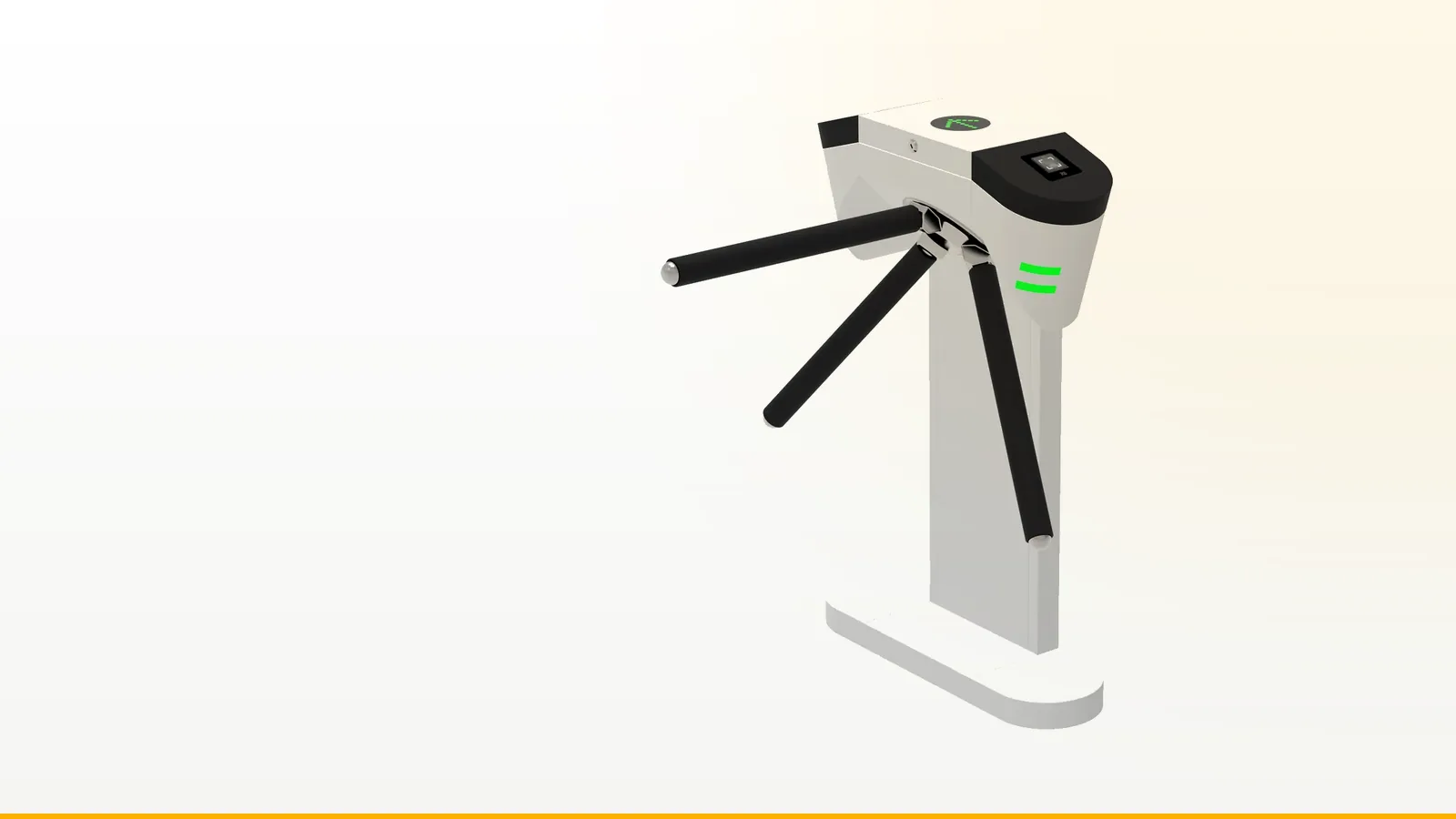
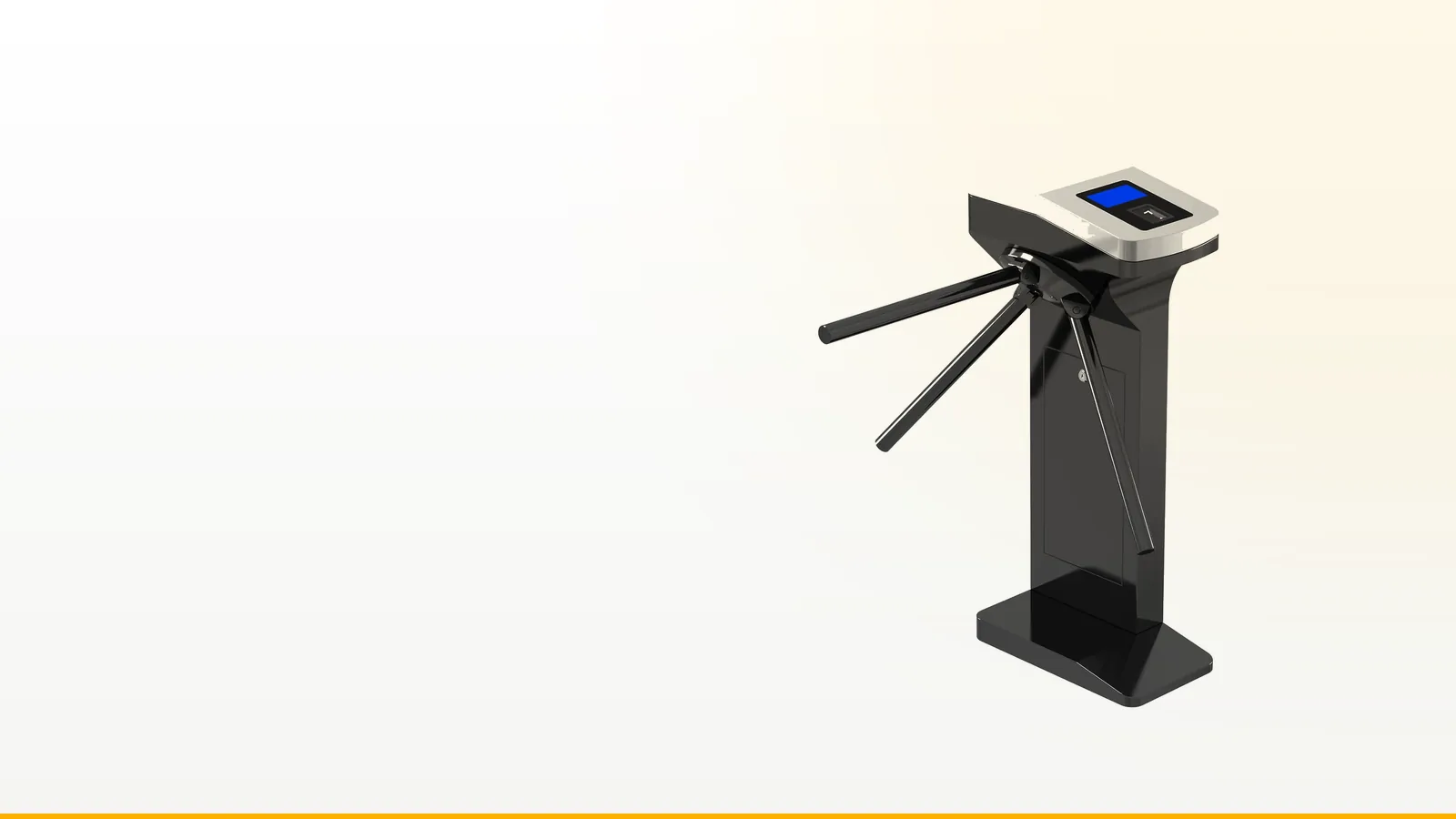
2Tripod turnstileThe first level that counts people, not openings
The arm unlocks only on a valid identification and lets exactly one person through. Throughput up to 40 people per minute, and on a power failure the arm drops and the passage is cleared for evacuation.
Where: Companies, sports centres, canteens, pools, museums.
Limit: the height reaches the waist - climbing over is physically possible. For an unsupervised perimeter you go to a full-height turnstile.
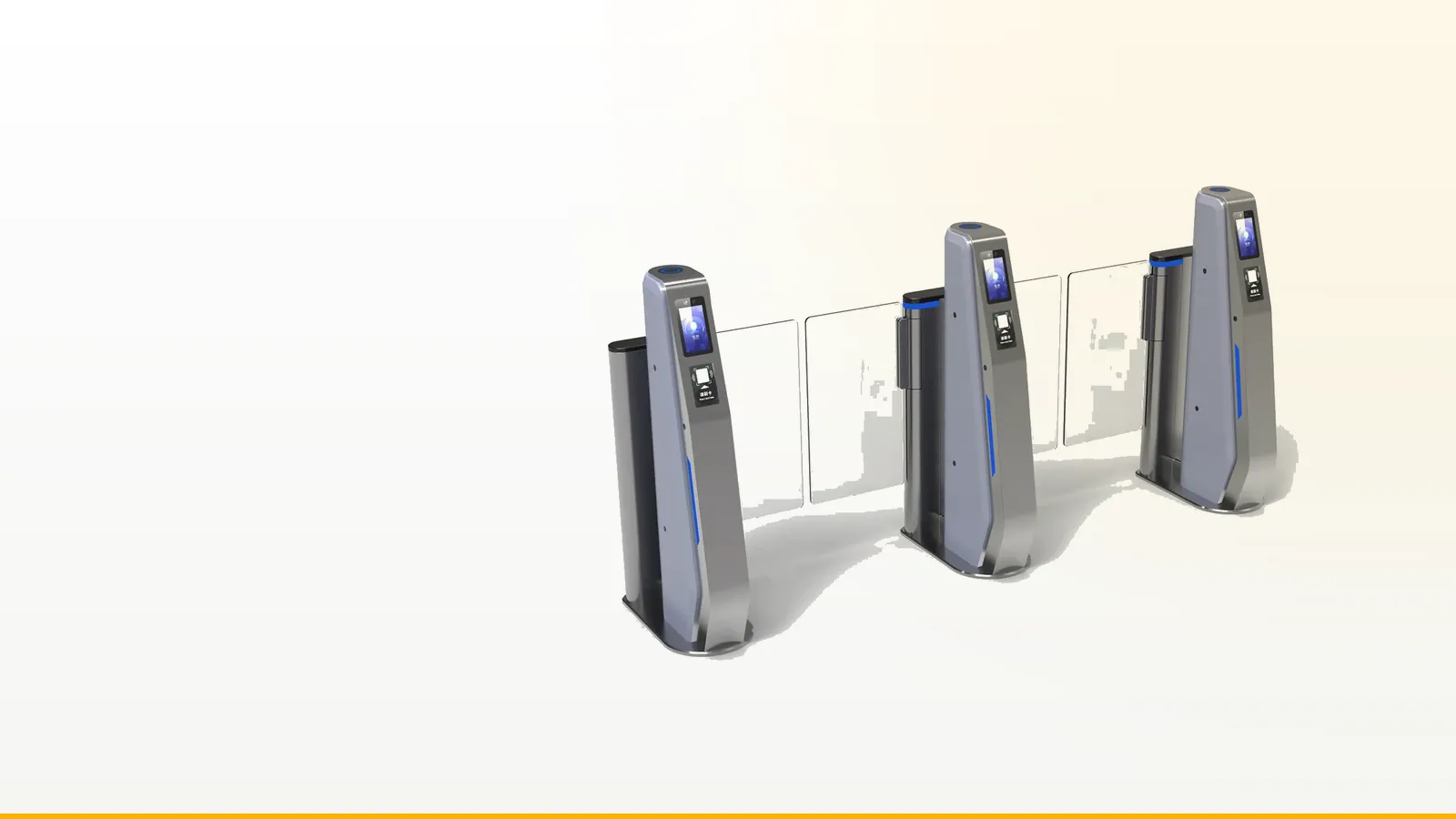
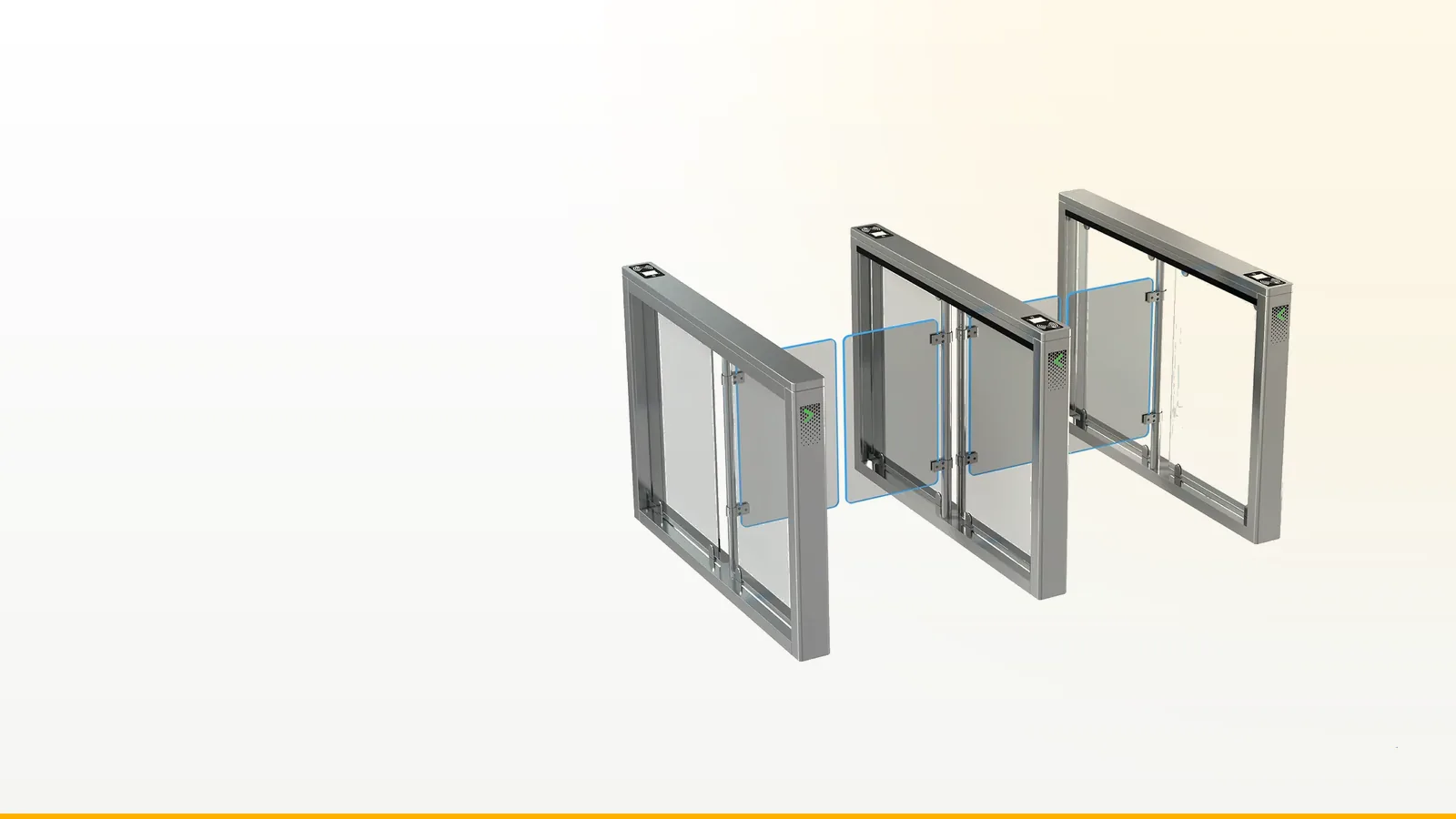
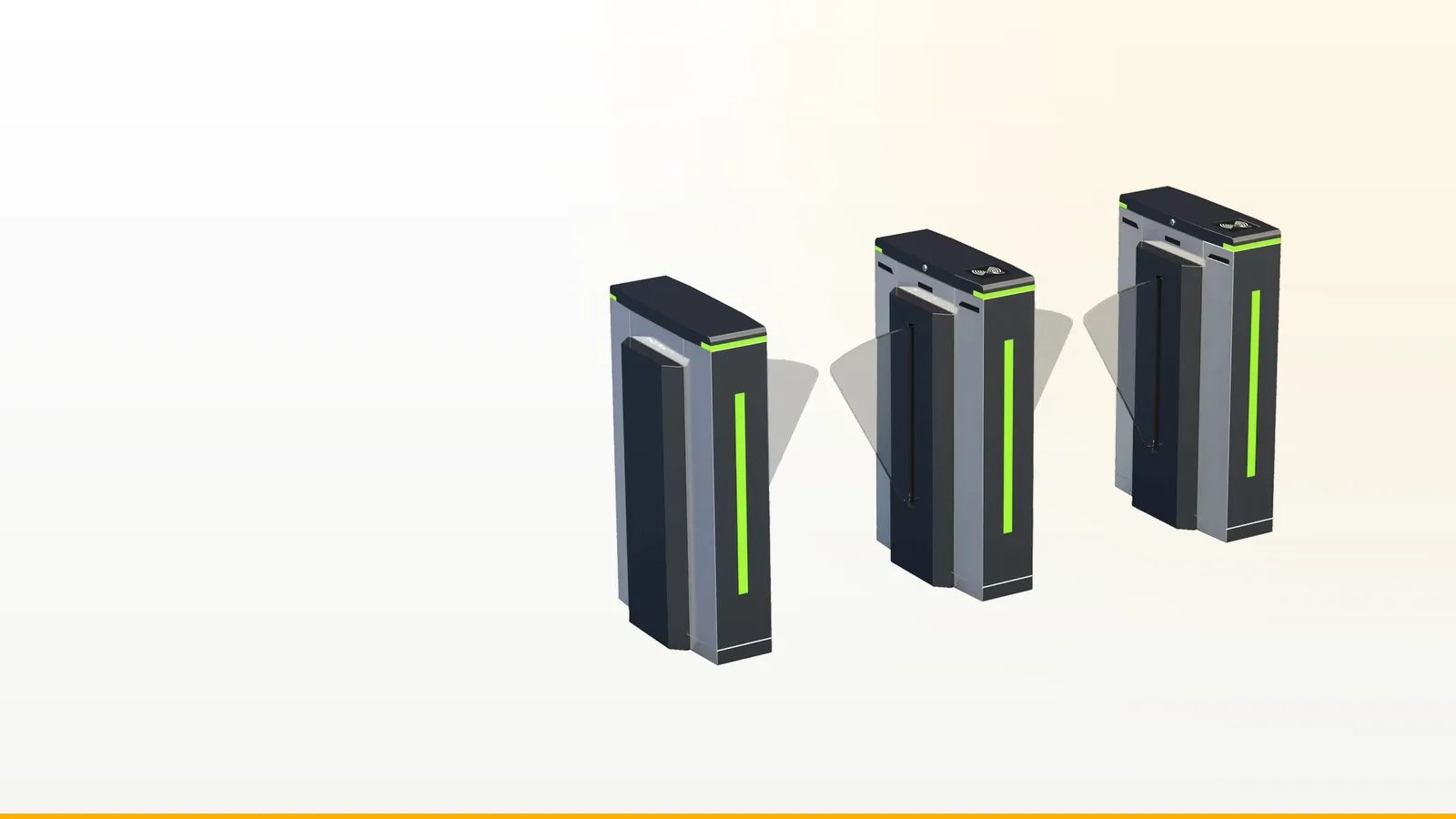
3Speed gate and swing barrierWhen the entrance also has to look right
Glass wings, opening in 0.4 seconds and sensors that report tailgating. The swing version has a passage up to 1000 mm, so trolleys, bicycles and wheelchairs pass without a separate lane beside the barrier.
Where: Prestige lobbies, company headquarters, banks, hospitals, hotels.
Why it is chosen: the only level that solves control, throughput and the impression at the entrance all at once.
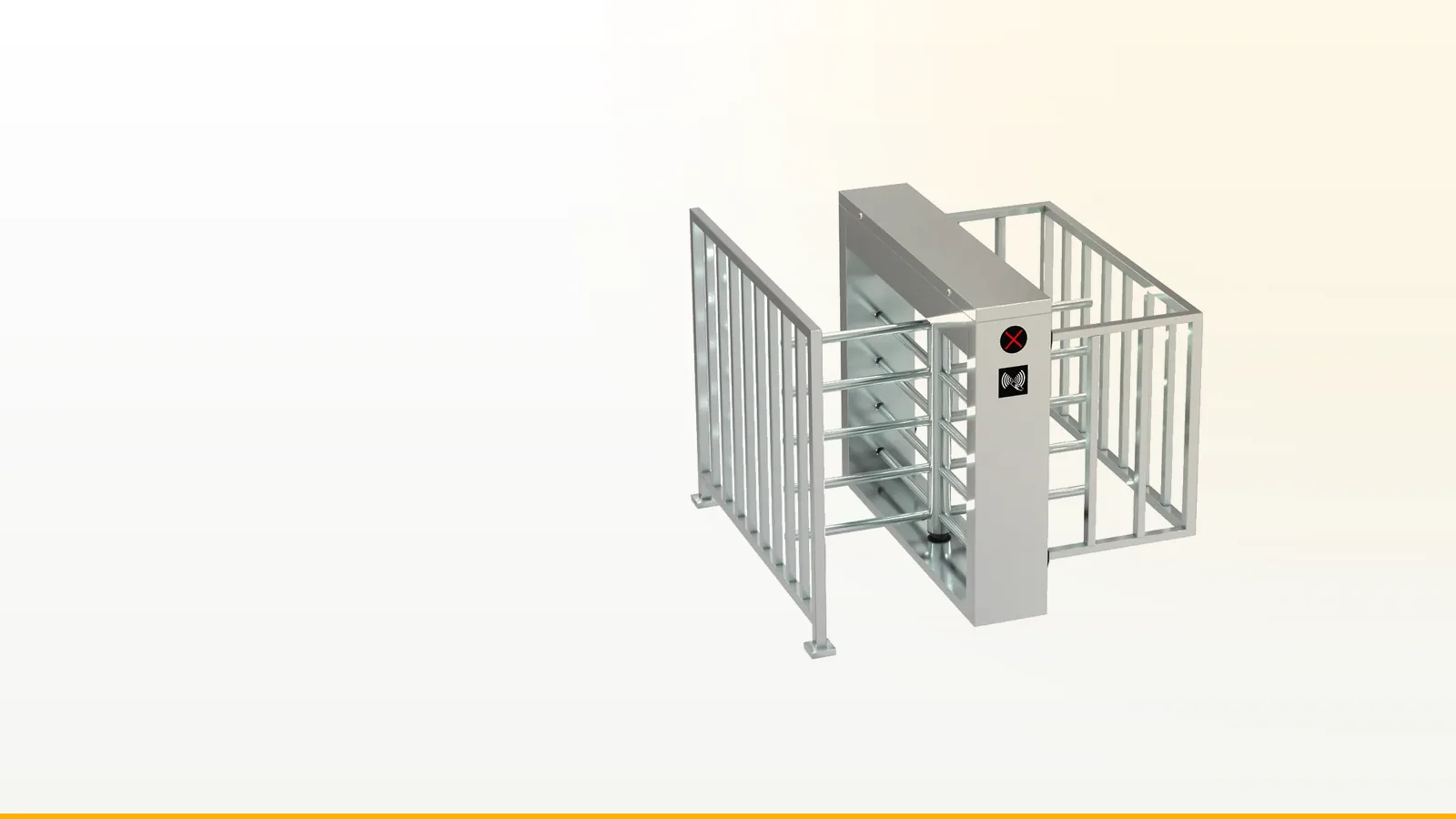
4Half-height turnstileThe middle ground that often gets overlooked
A taller rotor and an IP54 housing - it works outdoors, in rain and dust. It takes up considerably less space than a full-height unit, while the level of control is significantly higher than with a tripod.
Where: Factory grounds, warehouses, sports facilities, yard entrances.
When exactly this one: when a tripod is not enough, and there is neither the space nor the budget for full height.
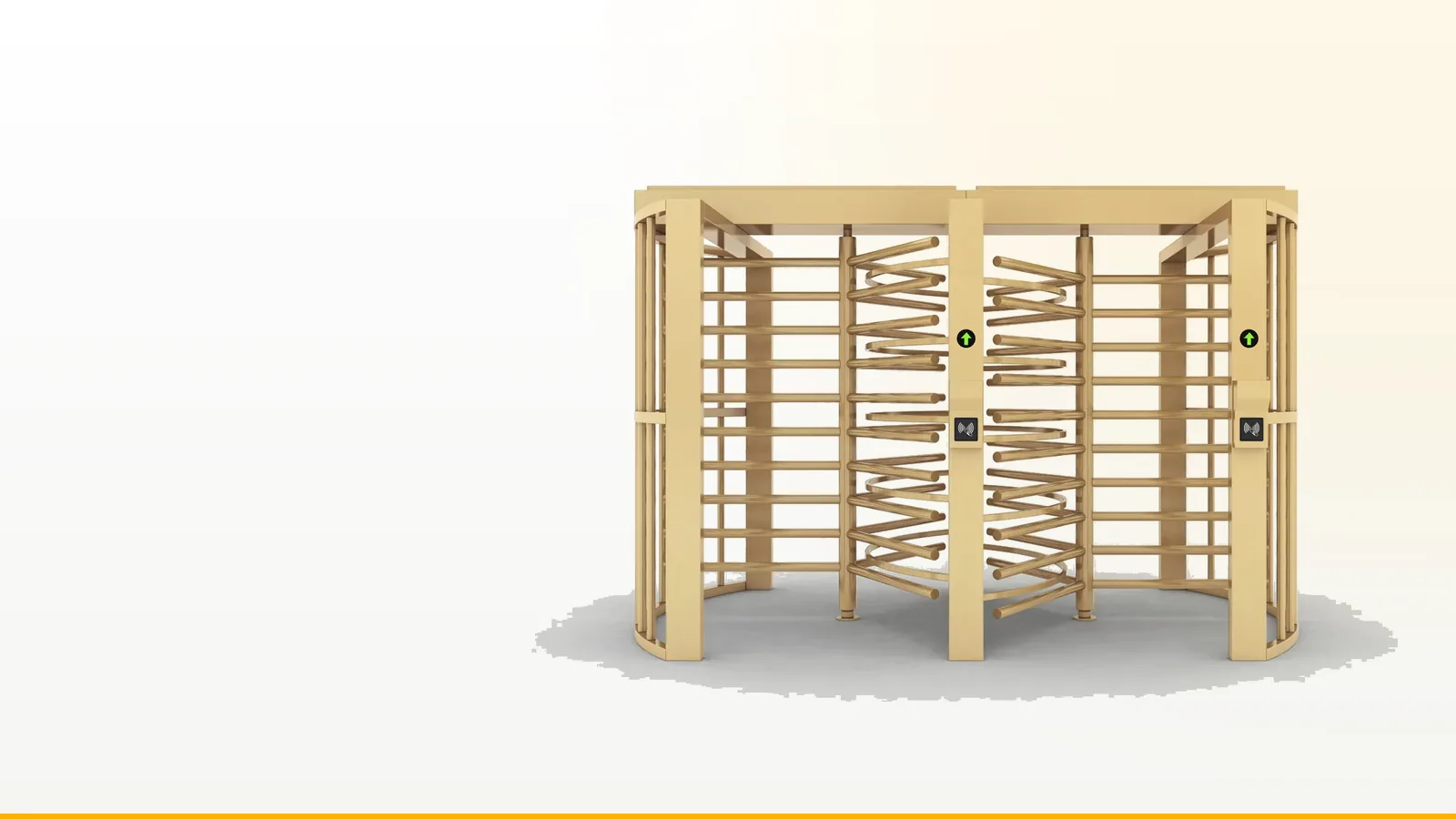
5Full-height turnstileThe strictest level - passage without identification is impossible
Height 2.3 m with railings on both sides. Climbing over, crawling under and passing two at a time are not a matter of discipline but of physics. Canopy and IP54 - it works outdoors all year round.
Where: Factory perimeters, stadiums, ports, energy facilities.
Why it costs more: the only level that works without a single person supervising the entrance.
6Automatic vehicle barriersThe same system, only for vehicles
The vehicle entrance runs on the same card and the same software as the pedestrian one. Vehicle and driver are in the same record - you do not run two separate systems that do not match.
Where: Vehicle entrances, car parks, yards, factory-ground gates.
Link: it connects to the gatehouse software and time & attendance.
Typical facilities
We adapt the system to the type of facility - from a single entrance to an entire perimeter.
One card - the whole system
Access control connects naturally to time & attendance: the same card opens the door and records working hours. On top of that, electronic lockers, the restaurant system and the gatehouse are tied in - one identity for everything.
- NFC / MIFARE cards and tags - the standard for employees
- QR codes - visitors and temporary passes
- Face recognition - DAL LC-20 and F2 terminals
- NFC phones - a phone instead of a card
FAQ
What happens during a power failure?
Barriers switch to a safe mode (free passage or locked - your choice and to code), and the system remembers all events.
Can we grant temporary access to contractors or guests?
Yes - temporary cards or QR passes with limited duration and zones.
Can you see who entered and when?
Every passage is logged - by user, door and time, with reports and search.
How many entrances do you need to protect?
Describe your facility - we will propose a level of protection and equipment.